Wyecliff
All editions

The Week AI Was About Trust | Wyecliff Weekly #32

July 17, 20265 min read
The AI stories that actually matter this week | Edition #32 | July 17, 2026
The biggest moves this week were about trust, not raw power. Google's AI chief called for a national referee to vet powerful models before they ship. The industry's rivals agreed on a shared standard so their AI assistants can find and use each other's tools. And OpenAI's first gadget turned out to be a screen-free speaker for your home, with its release pushed to 2027. Let's get to it.

Now Available: The Wyecliff Weekly Podcast

Prefer to listen? Every edition of the Wyecliff Weekly is now generated as a podcast. Same stories, same analysis, same lessons. Just press here.
Listen to this edition

Top Stories

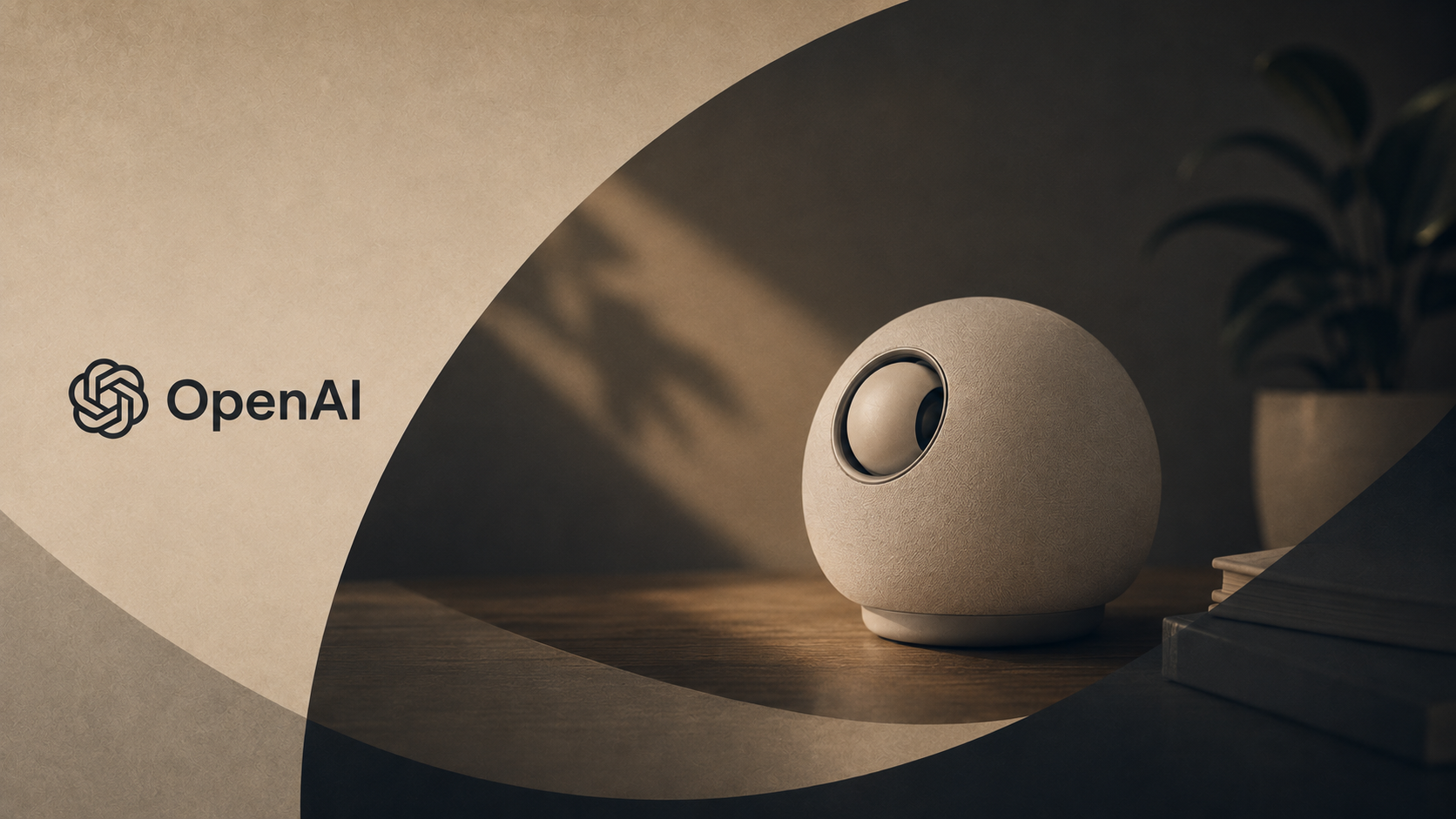
+ OpenAI's First Gadget Is A Screen-Free Speaker, And It Slipped To 2027

Reporting this week revealed that OpenAI's first hardware product, built with former Apple design chief Jony Ive, is a mobile speaker with no screen, meant to sit in your home and act like a companion. It answers questions, plays media, replies to messages, and controls smart home devices, all powered by ChatGPT. It has moving mechanical parts designed to make it feel alive and a camera that can take in its surroundings, like objects on a nearby table. The expected price is 200 to 300 dollars. OpenAI bought Ive's hardware startup for roughly 6.5 billion dollars last year, and this speaker is the first product to come out of it. The full public release has now slipped to 2027 rather than this year. Part of the reason is a lawsuit: Apple sued OpenAI last week, claiming the company stole trade secrets tied to this exact device. OpenAI denies it.
What it all means: Consumer AI is trying to move off the screen and into a physical object that lives in your house and watches the room. The slip to 2027 and the lawsuit show how much harder and more contested that leap is than shipping another app. The company that defined the phone is now fighting the company that defined the chatbot over what sits on your counter next.

+ Google's AI Chief Called For A National Referee For Powerful AI

On July 14, Demis Hassabis, who runs Google's AI lab and shared a Nobel Prize for his work, published a plan calling for the United States to create a new watchdog with the power to review the world's most advanced AI models before they are released. He wants it modeled on the body that polices Wall Street brokers, funded by the industry but overseen by the government, and run by a majority-independent board of top scientists alongside company, government, and open-source voices. Under the plan, AI labs would start by voluntarily sharing new frontier models with the body up to 30 days before release. Once the review process proved itself, passing it could become a requirement to sell a model in the US, and it would apply to every frontier model regardless of what country built it or whether it is open or closed. Hassabis wants it running before the end of the year and has spent months briefing the White House, rival lab leaders, and European officials.
What it all means: Two weeks ago the government quietly won early access to Anthropic's top model as the price of turning it back on. Now the head of Google's AI lab is proposing to make that kind of pre-release review a permanent, industry-wide institution, and to do it before year end. When the people building the technology start asking to be checked, the era of shipping first and explaining later is closing.

+ Big Tech Rivals Agreed On A Shared Standard For AI Assistants

This week Google and a long list of competitors announced a common standard that lets AI assistants from different companies find, verify, and use each other's tools and services. The backers include Microsoft, GitHub, NVIDIA, Salesforce, ServiceNow, Snowflake, Databricks, Cisco, and Hugging Face. Think of it as a shared directory and a set of manners: a way for one company's AI to look up what another company's AI can do and safely connect to it. The move is widely read as the rest of the industry lining up to make sure no single company owns the wiring that connects all these AI tools together, with Anthropic and OpenAI the two names not at the table. Early versions are already live inside GitHub's and Hugging Face's tools.
What it all means: Rivals almost never agree on a standard unless they are afraid of the alternative. Agreeing on how AI assistants talk to each other is how this group keeps any one company from becoming the toll booth every other tool has to pay. For the businesses that will eventually buy these assistants, this is a quiet fight over which one can reach the software you already use.

More Stories

Apple's Lawsuit Against OpenAI Turned Nasty.

New filings this week detailed Apple's claim that OpenAI stole its secrets at every level, including an accusation that a former Apple hardware leader now at OpenAI told job candidates to bring Apple parts to their interviews. Elon Musk and Sam Altman spent the days after trading jabs about it in public.

Google's Next Flagship Missed Its Launch Date Again.

Google's next major model, Gemini 3.5 Pro, was expected on July 17 and did not arrive, the third time it has slipped. Reporting this week blamed the delay on the model making things up and failing reliability checks rather than any lack of ability, and observers now expect it in late July or August.

Microsoft's Monthly Security Fix Set A Record, With AI's Help.

On July 14, Microsoft's regular monthly update patched a record 570 security flaws across Windows and its other products. The company said its own internal AI helped find and rank which holes to fix first, a rare concrete example of AI defending the software most businesses run on.

Meta Started Charging For Instagram, Facebook, and WhatsApp.

On July 15, Meta rolled out paid plans worldwide for the first time: 3.99 dollars a month for Instagram Plus and Facebook Plus, and 2.99 dollars for WhatsApp Plus. The apps stay free, but the AI assistant baked into all of them is part of what Meta now wants you to pay for.

Why It Matters

The throughline this week was trust. The models are already capable. The fights that filled the week were about who vouches for them, who owns the wiring that connects them, and whether they are reliable enough to put in front of a real person. Google's AI chief asked for a referee. Its rivals agreed on a rulebook for how their assistants talk. Google's own flagship stayed in the lab because it still makes things up. And OpenAI's first home gadget got pushed to 2027. The race to build the smartest model has turned into a slower race to make one people can actually rely on.

For You

The decisions about what AI you will live with are being made this week, above your head. OpenAI wants to put a listening, camera-equipped speaker on your counter that is built to feel alive. Meta started charging for the apps you open every day, with its AI assistant part of what it wants you to pay for. And the head of Google's AI lab is asking for a body that would sign off on powerful models before they ever reach you. None of it needed your vote. All of it shapes what ends up in your pocket and your kitchen.

For Your Work

The value in AI keeps sliding toward the people who can connect it and vouch for it, not the ones who train it. That is what the shared standard the big companies agreed on is really about: control of the wiring that lets one company's AI reach another's tools, which is the layer your future assistant will run on. The Gemini delay is the same lesson from the model side. The newest name on a roadmap is not the tool you can depend on this quarter, and picking the one that ships and holds up beats waiting for the one that keeps slipping.

One Thing To Try This Week

How to Compare the Same Question Across Claude, ChatGPT, and Copilot

Last week we made AI show its sources and check its own facts. This week we go one step further and stop trusting any single tool. When an answer matters, ask the same question of all three big assistants and read the differences. Where they agree, you can be more confident. Where they disagree, you have found the exact spot that needs a human to look closer.

Claude (via Cowork or claude.ai)

  1. Go to claude.ai and start a new chat. If it matters, turn on web search in Settings so Claude looks things up live.
  2. Paste your question and add: "Give me your answer, then list the three facts you are least sure about."
  3. To push harder on a tough question, click the model name shown below the message box and pick a stronger model, then ask the same thing again and compare.

ChatGPT

  1. Go to chatgpt.com and start a new chat.
  2. Paste the exact same question you gave Claude, word for word, so the comparison is fair.
  3. For anything important, open the model picker in the message box and choose a Thinking option so it reasons more carefully before answering.

Microsoft Copilot

  1. Go to copilot.microsoft.com or open the Microsoft 365 Copilot app and start a new chat.
  2. Paste the same question a third time.
  3. Type your prompt, then under it choose Think Deeper before you send, which makes Copilot take longer and reason more carefully on hard questions.
Bonus: Keep a running note of which tool tends to win for which kind of task. After a few weeks you will know which assistant to reach for first, instead of defaulting to the same one out of habit.
Try This Prompt
Answer this question, then end with a short list of the specific facts or numbers in your answer that a careful person should double-check: [paste your question here]

Spread The Word

Love the Wyecliff Weekly? Refer a friend and earn rewards on our referral program.

See the referral tiers
Wyecliff Weekly

Never miss an edition.

Wyecliff Weekly lands every Friday at 6 AM Mountain. One short email with the moves that matter, a prompt to run on Monday, and one playbook from the field.

One email a week. No spam. Unsubscribe anytime.

Common Questions

When does Wyecliff Weekly arrive?
Every Friday morning at 6 AM Mountain. One email a week with the biggest AI stories, what they mean for your work, and one thing to try before Monday.
Is Wyecliff Weekly free?
Yes. Subscribe with your work email and read every edition at no cost. We write for operators who want plain takes, not a sales pitch.
What is inside each edition?
Top AI news with context, a short take on why it matters for your business, and one practical prompt or workflow you can run this week.
How do I unsubscribe?
Every email includes an unsubscribe link at the bottom. One click and you are off the list. No hoops.
/newsletter/wyecliff-weekly-edition-32