Wyecliff Weekly | February 20–27, 2026
Your weekly roundup of AI news, automation trends, and practical insights for businesses ready to modernize.
+ More Than Half of Enterprise SaaS Is Going Away At India's AI Impact Summit
Mistral CEO Arthur Mensch told CNBC that more than 50% of what companies currently buy in enterprise software will shift to AI. He said Mistral can now build a fully custom procurement or supply chain workflow in days, something that used to require a dedicated vertical SaaS product. Mistral now has more than 100 enterprise customers actively replacing older software stacks with AI. Software stocks are already down more than 20% this year.
+ UK Moves to Close AI Chatbot Loopholes Around Children
The UK government announced plans to close legal loopholes that currently exclude some one-to-one AI chatbot interactions from existing online safety laws. The proposed amendments would tighten requirements around stranger-pairing in gaming, restrict AI chatbots from forming unsafe relationships with minors, and accelerate a potential ban on social media access for children under 16. Officials cited growing concern about AI companions targeting emotionally vulnerable young users, a concern amplified by the GPT-4o lawsuits in the US from the prior week.
+ Samsung Embeds Perplexity at the OS Level in Galaxy S26
Samsung launched the Galaxy S26 this week with Perplexity integrated directly into the phone's operating system, the first time a third-party AI company has achieved that level of access on a major mobile platform. Users can activate the Perplexity assistant with the wake phrase "Hey Plex" or by holding the side button. From there, it has read and write access to core Samsung apps including Notes, Calendar, Gallery, Clock, and Reminders. The phone ships March 11.
+ Anthropic Rejects Pentagon Ultimatum on AI Safeguards
With a Friday 5:01 PM deadline looming, Anthropic CEO Dario Amodei rejected the Pentagon's final offer to loosen restrictions on its Claude AI model. The dispute centers on two redlines Anthropic has maintained for months: Claude will not be used for mass surveillance of Americans, and it will not power fully autonomous weapons. Defense Secretary Hegseth threatened to cancel Anthropic's $200 million contract and designate the company a "supply chain risk," a classification normally reserved for companies tied to foreign adversaries. Amodei's response was unambiguous: "These threats do not change our position. We cannot in good conscience accede to their request." As of Friday, talks remained unresolved.
+ Microsoft Warns of AI Memory Poisoning Attacks Already Happening in the Wild
Microsoft security researchers identified a new attack vector this week in which manipulated links embed hidden instructions that alter an AI chatbot's memory and bias its future recommendations. The technique exploits URL parameters to insert persistent promotional or malicious instructions into AI assistants without any visible cues to users. More than 30 organizations across finance, health, legal, and SaaS sectors were observed attempting variations of the tactic. Microsoft has classified the behavior as "memory poisoning" and implemented mitigations in Copilot, but warned that detection requires actively scanning for suspicious prompt patterns.
+ More on India Hosting the World's Biggest AI Summit, Chaos Included
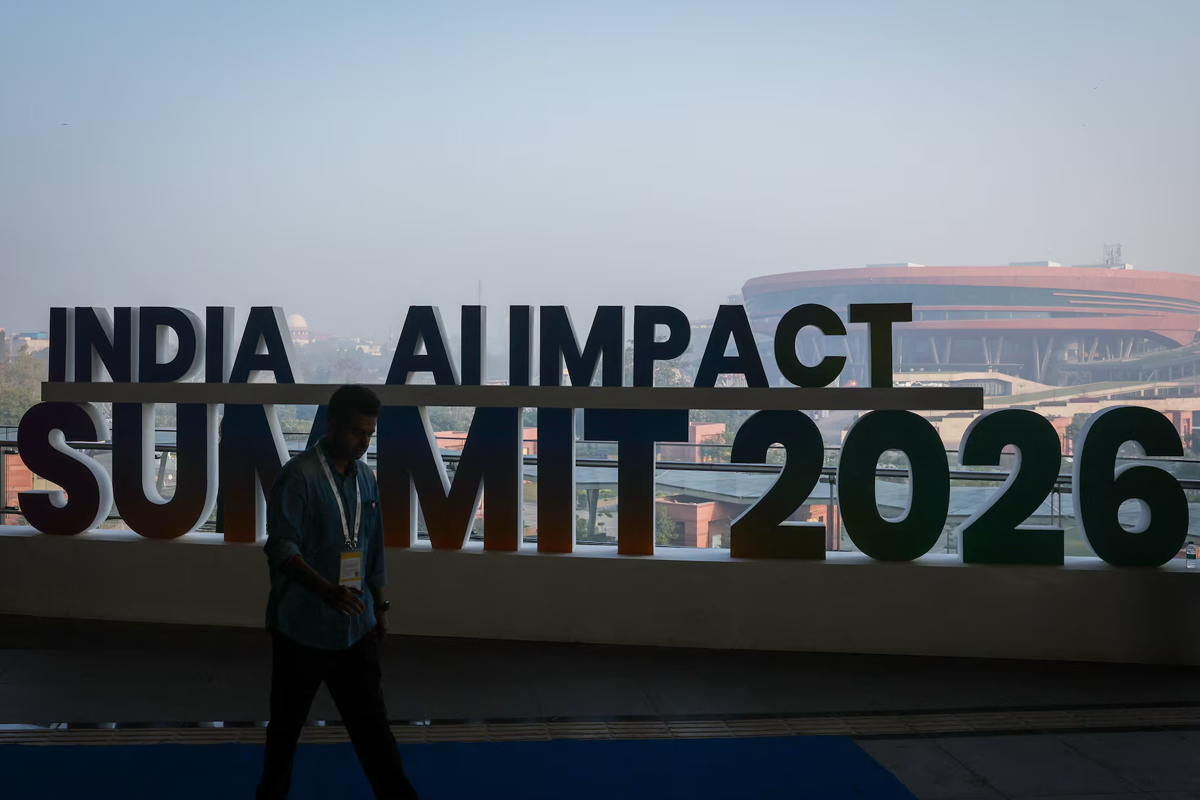
Every major AI CEO converged on New Delhi this week for India's AI Impact Summit, with Sundar Pichai, Sam Altman, and Dario Amodei on stage alongside Prime Minister Modi and French President Macron. India announced a target of $200 billion in AI infrastructure investment over two years, and earmarked $1.1 billion for a state-backed venture fund focused on AI startups. The summit was also, by most accounts, a logistical mess, blocked roads, conflicting security instructions, and a moment that immediately went viral: Open AI CEO, Altman and Anthropic CEO, Amodei declined to hold hands on stage during a group photo with Modi, after Anthropic's Super Bowl ad had taken direct shots at OpenAI.
The Wyecliff Perspective
Who gets to set the rules when AI becomes infrastructure?
Mistral's CEO said more than half of enterprise software is going away. That's what his customers are already doing, replacing SaaS subscriptions with custom AI workflows built in days. The businesses accelerating that shift are the ones that own their systems rather than renting them. The ones left behind are still paying per seat for tools their teams work around, not with.
India's summit showed what the race for AI infrastructure looks like at a geopolitical scale. Two hundred billion dollars in investment targets. Every major CEO competing for a billion-user market. Rival companies refusing to shake hands on stage. The infrastructure battle is global, and the ground is shifting every week.
Anthropic's Pentagon standoff is the most direct version of a question every business will eventually face: when you build on someone else's platform, you inherit their constraints and their conflicts. Anthropic built the first AI model deployed on classified military networks. Now the government wants to use it without restriction, and the company is willing to walk away from a $200 million contract rather than comply. Whatever happens after Friday's deadline, the story makes one thing clear: platform dependency carries real risk, whether you're a government, a company, or a startup.
The businesses that come out ahead won't be the ones most tightly bound to any single platform. They'll be the ones that built their own systems, on their own terms.
That's what we build at Wyecliff.
One Thing To Try This Week
Pick one software subscription your team pays for and ask a direct question: what would it take to replace this with a custom AI workflow?
What data does the tool touch? What decisions does it help your team make? What outputs does it produce?
You'll see clearly whether you're paying for a solution or paying to access your own data through someone else's interface.
This is your first step toward owning the work instead of renting it.
This week made the stakes concrete. The CEO of one of Europe's most valuable AI companies said half of enterprise software is already being replaced. The world's largest smartphone maker handed a third-party AI company system-level access to its devices. And one of the most safety-focused AI labs in the world stood up to a government ultimatum rather than let its technology be used without limits.
The shift isn't coming. It's here, and the decisions businesses make now about which platforms to depend on, and which systems to own, will define how they compete for the next decade.
If you're ready to start building systems that work for your business instead of binding it, the Wyecliff team is here to help.
Tell us your biggest problem here: wyecliff.ai/contact