Wyecliff Weekly | January 23–30, 2026
Your weekly roundup of AI news, infrastructure moves, and practical insights for businesses ready to modernize.
Welcome to the 8th edition of the Wyecliff Weekly.
This week, the AI world saw a major philosophical split. Turing Award winner Yann LeCun left Meta and declared large language models a "dead end," launching a new lab focused on visual learning instead. Meanwhile, Anthropic doubled down on LLMs by turning Claude into a workflow hub with native Slack, Figma, and Asana integrations.
We unpack these and more below, plus three more signals operators can't ignore.
The Big Headlines
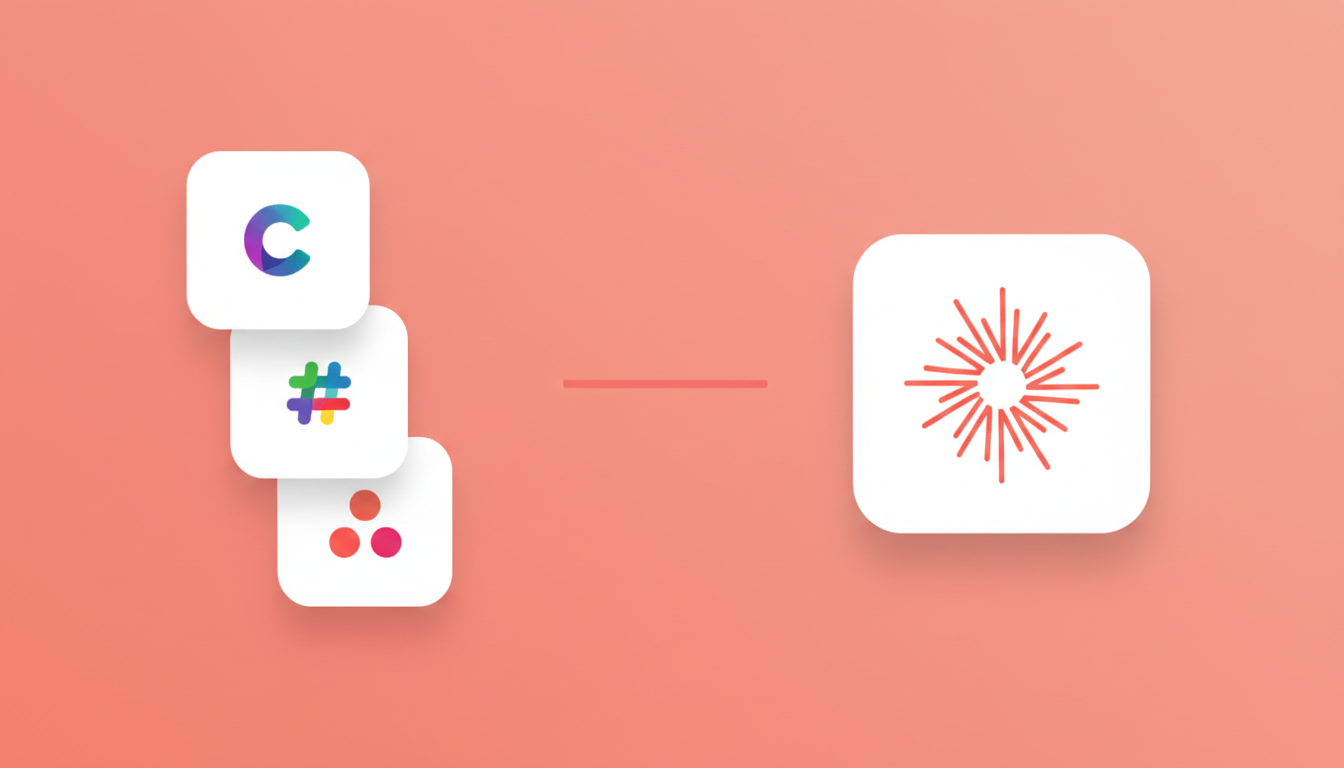
+ Anthropic Launches Interactive Claude Apps with Slack, Figma, and Asana Integration
Anthropic introduced apps that embed workplace tools directly into Claude's chat interface, letting users take actions inside Slack, Figma, and Asana without leaving the conversation. This is the clearest signal yet that AI assistants are evolving from answer engines into workflow orchestrators. The value isn't just in what the model knows; it's in what it can do inside the systems you already use.
+ Clawdbot Goes Viral, Then Gets Rebranded to Moltbot
An open-source AI agent called Clawdbot exploded across tech feeds this week, causing Mac Mini shortages and lifting Cloudflare's stock 14%. Unlike typical chatbots, Clawdbot runs locally on your machine and can actually execute tasks: managing calendars, sending emails, running code, and operating autonomously 24/7. Then Anthropic stepped in, citing trademark conflicts with "Claude," and forced creator Peter Steinberger to rebrand to "Moltbot." The lobster mascot stays; the momentum continues. For operators, this is a preview of where personal AI is heading: agents that run on your hardware, connect to your tools, and actually do things without waiting for permission.
+ OpenAI Launches Prism for Scientific Writing
OpenAI unveiled Prism, a cloud-based platform for drafting scientific papers with AI assistance for equations, citations, and figures. It's free for personal accounts with premium features planned. Another signal that AI is moving from general-purpose chat into specialized, high-value workflows. The pattern is clear: the next wave of AI tools won't try to do everything. They'll do one thing exceptionally well.

More Stories This Week
+ Elon Musk Considers Merging SpaceX and Tesla
Reports emerged that SpaceX is exploring a potential merger with Tesla or a tie-up with xAI. If it happens, it would create one of the most vertically integrated technology conglomerates in history, spanning EVs, rockets, satellites, and AI. The consolidation trend in tech continues to accelerate, and the implications for supply chains, competition, and innovation are significant.
+ OpenAI to Begin Testing Ads in ChatGPT for Free Users
OpenAI announced it will start placing sponsored content at the bottom of ChatGPT responses for non-paying users. The move signals the company is exploring new revenue streams amid massive infrastructure costs. For businesses, this is a reminder that "free" AI tools come with tradeoffs; the question is whether those tradeoffs affect your workflows and data.
+ Yann LeCun Leaves Meta, Says LLMs Are a "Dead End"
Turing Award winner Yann LeCun departed Meta and launched AMI Labs in Paris, arguing that large language models will never achieve human-level intelligence. His new focus: "world models" that learn through visual experience rather than text. When one of AI's most respected researchers calls the dominant approach a dead end, it's worth paying attention to where the field might pivot next.
The Wyecliff Perspective
Yann LeCun's departure from Meta isn't just personnel news. It's a signal that even inside the biggest AI labs, there's real disagreement about whether the current approach will get us where we need to go.
For operators, the takeaway isn't to wait for the "right" AI paradigm. It's to build systems that are modular enough to adapt. The companies that win won't be the ones who bet everything on one model or one vendor. They'll be the ones who built workflows that can swap components as the technology evolves.
Meanwhile, Anthropic's new integrations show where the real value is shifting: not in the model itself, but in how deeply it connects to the tools you already use. The SaaS era trained us to buy software shelf by shelf. The AI era rewards companies that build connected systems around their actual workflows.
The Moltbot phenomenon reinforces this point. An open-source project built by one developer went viral because it solved a real problem: an AI that actually does things, running on your own hardware, without waiting for a vendor to add the feature you need. That's the future of AI tooling: modular, adaptable, and built around your workflows rather than someone else's product roadmap.
That's what we do at Wyecliff. We help businesses build smart, adaptable systems that don't lock you into one vendor's roadmap.
One Thing To Try This Week
Pick one repetitive task your team does inside Slack, Asana, or a similar tool. Document exactly what triggers it, what steps are involved, and what the output looks like.
That documentation is the first step toward automation, whether you use Anthropic's new integrations, an open-source agent like Moltbot, or a custom solution. The insight compounds.
This week's theme is not simply that AI keeps getting smarter. It is that AI is becoming embedded in workflows, workplace tools, and real-world execution.
For operators, that means two things. First, you cannot treat AI as a side project. It needs to be woven into your workflows, data, and risk management. Second, you do not need to chase every announcement. You need a clear process for translating the right announcements into measurable pilots.
If you are ready to turn this week's headlines into a practical plan, the Wyecliff team is here to help.
Tell Us your biggest problem here: wyecliff.ai/contact